Multiple entry points
Pair words with examples, objects, pictures, demonstrations, or a brief model while preserving the learning purpose.
Participation choices without private labels
Plan practical alternatives before a session and keep adult supervision, consent, and qualified support in view.
Access is part of preparation
The Inclusion Lens helps an adult plan alternatives in language, representation, response, movement, sensory load, pace, and materials. It does not label, diagnose, or create an individualized plan.
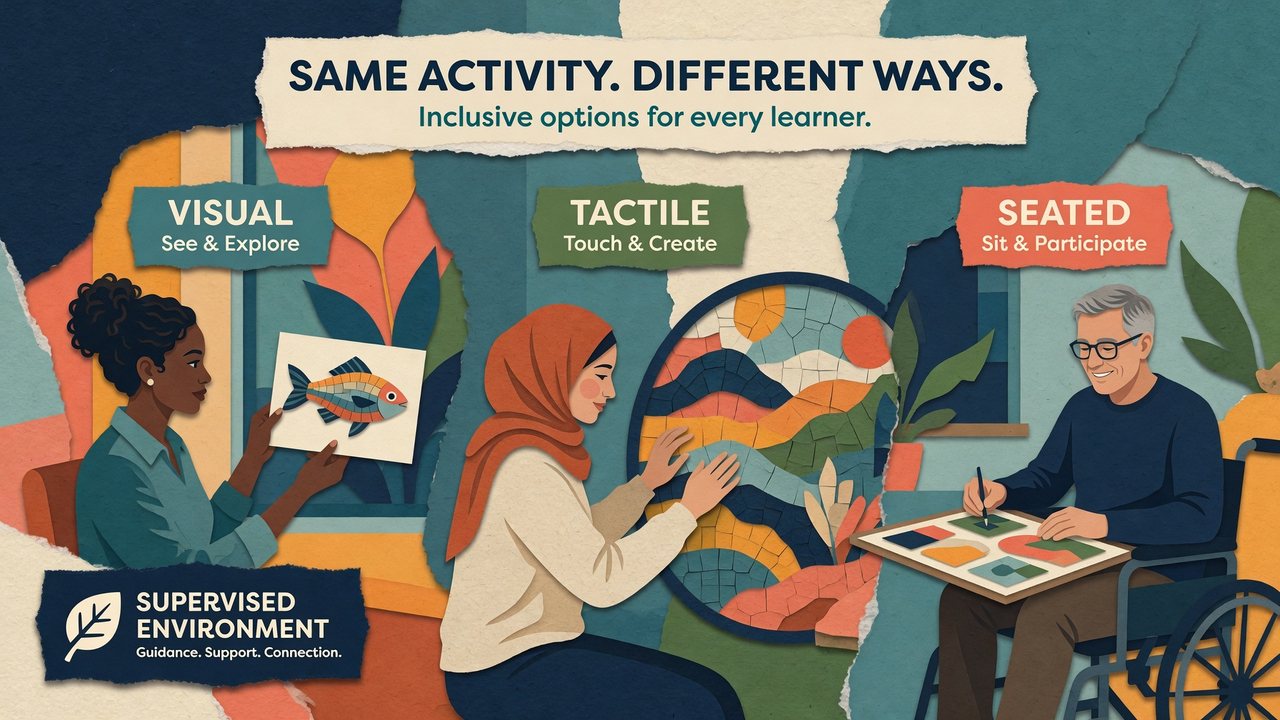
Pair words with examples, objects, pictures, demonstrations, or a brief model while preserving the learning purpose.
Offer alternatives to everyone so a participant does not need to disclose a private reason for choosing one.
Use visible steps, reduce unrelated time pressure, and make observing or pausing a legitimate role.
Review noise, light, movement, texture, clutter, crowding, and access to a quieter route.
Use clear headings, strong contrast, scalable text, plain language, and cues that do not rely on color alone.
Follow known participant needs, consent, organizational procedures, and qualified guidance without storing diagnoses in the app.